
01
Mario Callegaro
Independent research consultant
Callegaro Research Limited
Expert in Survey Science, User Experience, and AI assisted research, with deep foundation in academic research and 15-year experience at Google.
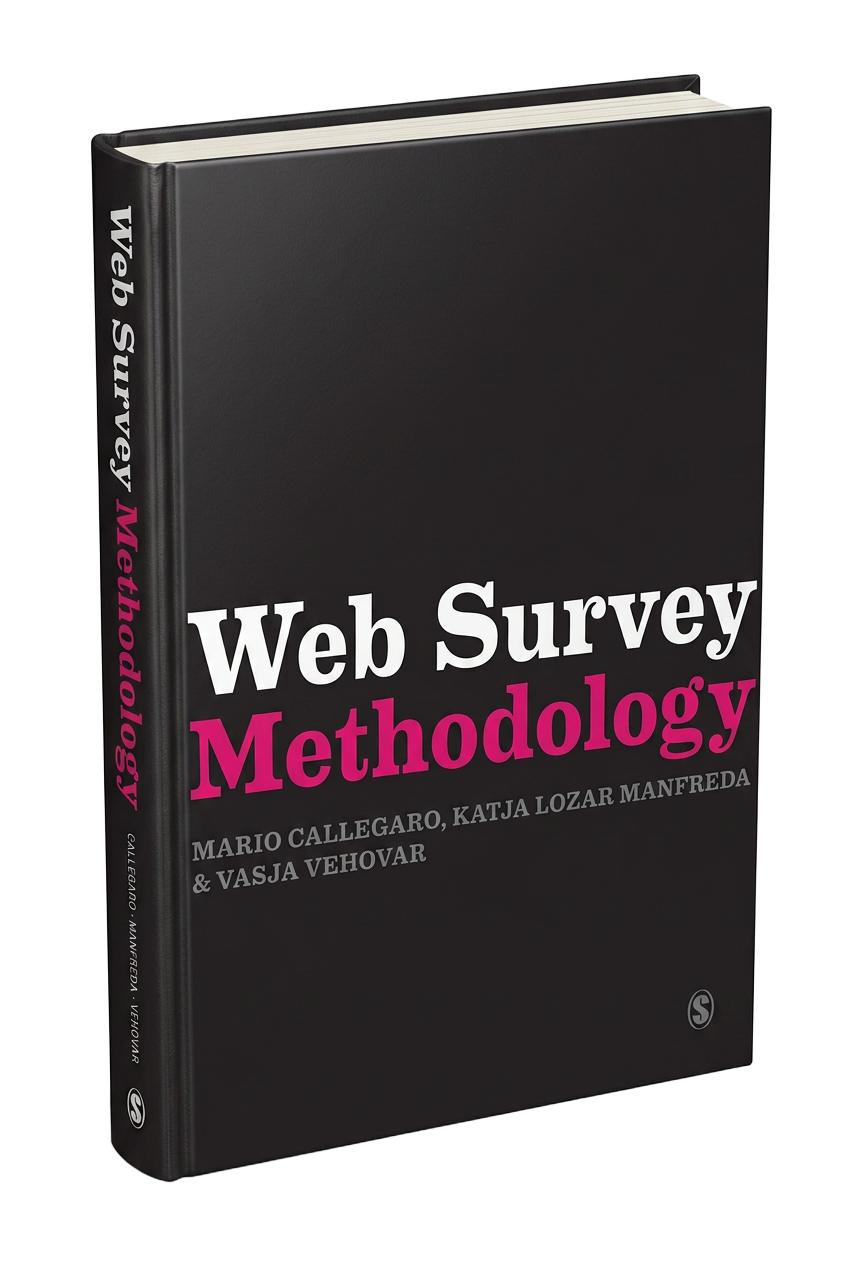
Web Survey Methodology
Callegaro · Lozar Manfreda · Vehovar
The book provides a comprehensive guide to web survey methodology, with a sustained focus on methodological principles and conceptual foundations, developed systematically across twelve stages of the web survey process, providing both a coherent knowledge framework and practical guidance for researchers. Due to its exhaustive and systematic elaboration, the book has become the most cited (Google Scholar) monograph dedicated to web surveys.
Research Methods for Social Scientists series
下载PDF阅读中文翻译Read the Chinese translationWeb Survey Methodology appeared after two turbulent decades of methodological developments in web surveys, which begin to emerge in the mid-1990s. By mid 2010s, web surveys had become the dominant mode of survey data collection, and methodological progress had reached a considerable level of maturity and stability. This created the conditions for establishing a comprehensive overview addressing conceptual issues while also synthesizing key practical guidance. The fundamental concepts, terminology, structural framework, and procedural stages elaborated in this book remain highly relevant, notwithstanding several notable developments in the field. The most conspicuous expansions concern online panels, mobile devices, mixed-mode survey systems, and especially the increasing role of artificial intelligence, which now permeates all twelve stages of the web survey process. However, all these advances have primarily affected the practical implementation and operational optimization of surveys, while the underlying methodological principles, as well as the overall flow and structure of the web survey process, remain essentially intact.
Core topics from preparation to questionnaire design, recruitment testing to analysis and survey software are all covered in a systematic and insightful way. The reader will be exposed to key concepts and key findings in the literature, covering measurement, non-response, adjustments, paradata, and cost issues.
The book also discusses the hottest research topics in survey research today, such as internet panels, virtual interviewing, mobile surveys and the integration with passive measurements, e-social sciences, mixed modes and business intelligence. The book is intended for students, practitioners, and researchers in fields such as survey and market research, psychological research, official statistics and customer satisfaction research.
Independent research consultant
Callegaro Research Limited
Expert in Survey Science, User Experience, and AI assisted research, with deep foundation in academic research and 15-year experience at Google.
Professor of Statistics
University of Ljubljana
Author of the globally first PhD thesis in web survey methodology, with research focus on various aspects of web survey methodology.
Professor of Statistics
University of Ljubljana
Pioneer in research on web survey methodology since 1996, with broad focus on social science methodology and social informatics.
“An impressive achievement. A thorough, systematic and authoritative treatment of web survey research that will quickly become the standard reference in the field.”
“Beautifully comprehensive. The authors weave together more than fifteen years of methodological research into a single, accessible volume.”
“A must-read. Conceptually rigorous and practically grounded — essential for anyone designing surveys in the digital age.”
“Refreshingly clear and intellectually honest. The definitive guide for both academic researchers and survey practitioners.”
Read every chapter freely, with searchable text and citations.
OpenAuthorised translation of the complete volume.
OpenDefinitions for the field's core methodological vocabulary.
OpenDetailed cross-references across all eleven chapters.
OpenReport a correction or error for the first edition.
OpenDirect line to the authors for academic correspondence.
OpenShare feedback on the book or ask the authors a methodological question. We read every message.